












Room I — The Study
60:00
Start
Enter fullscreen to begin
Designed by Jeroen Alessie
Dr. Cecil Pryce
Dr. Cecil Pryce — police physician
Dr. Aldric Voss
Dr. Aldric Voss, M.D. — 1887
Mara Fell
Mara Fell — under suspicion
Unlabelled vial
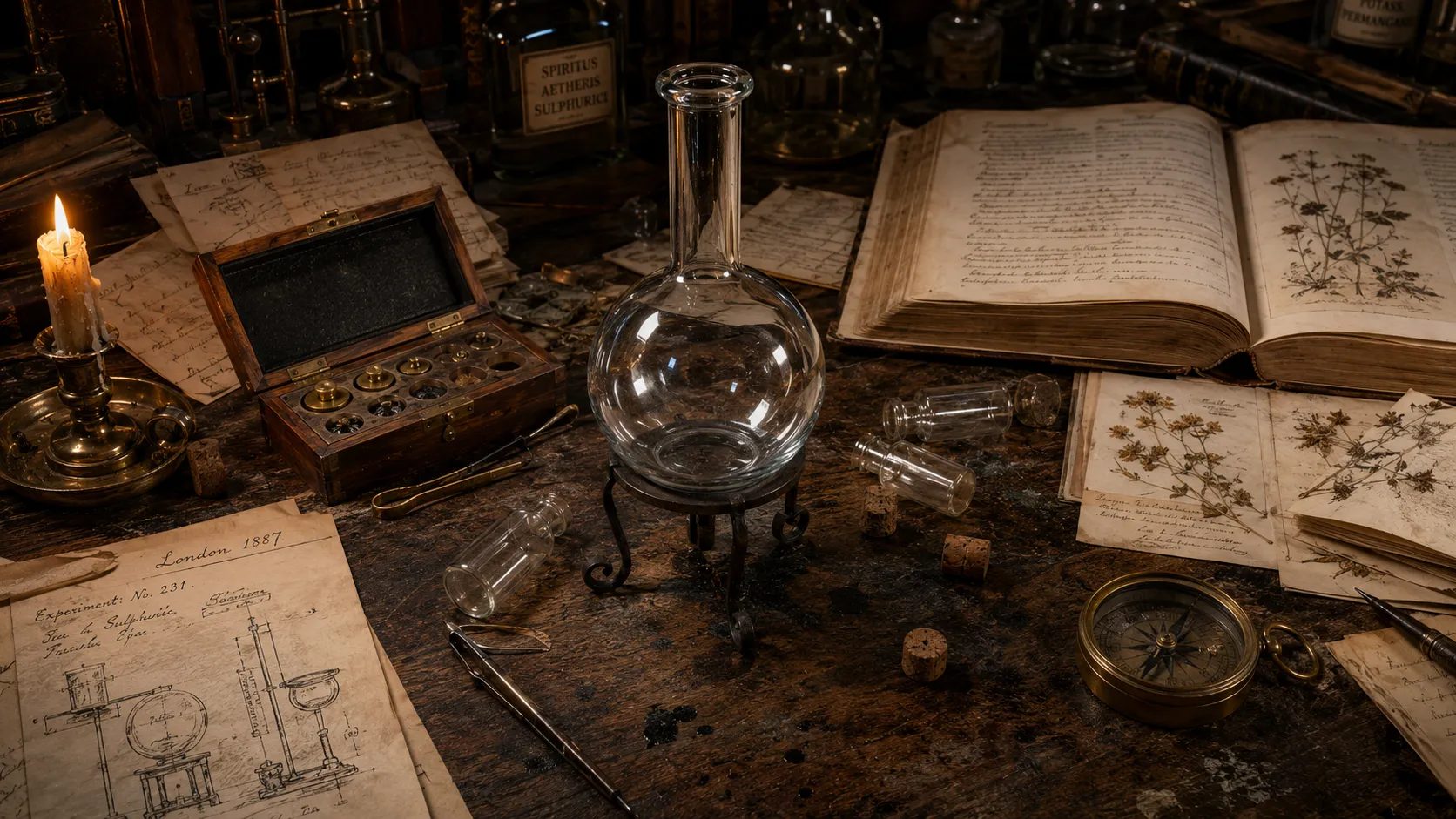
The unlabelled vial
London  ·  November 1887

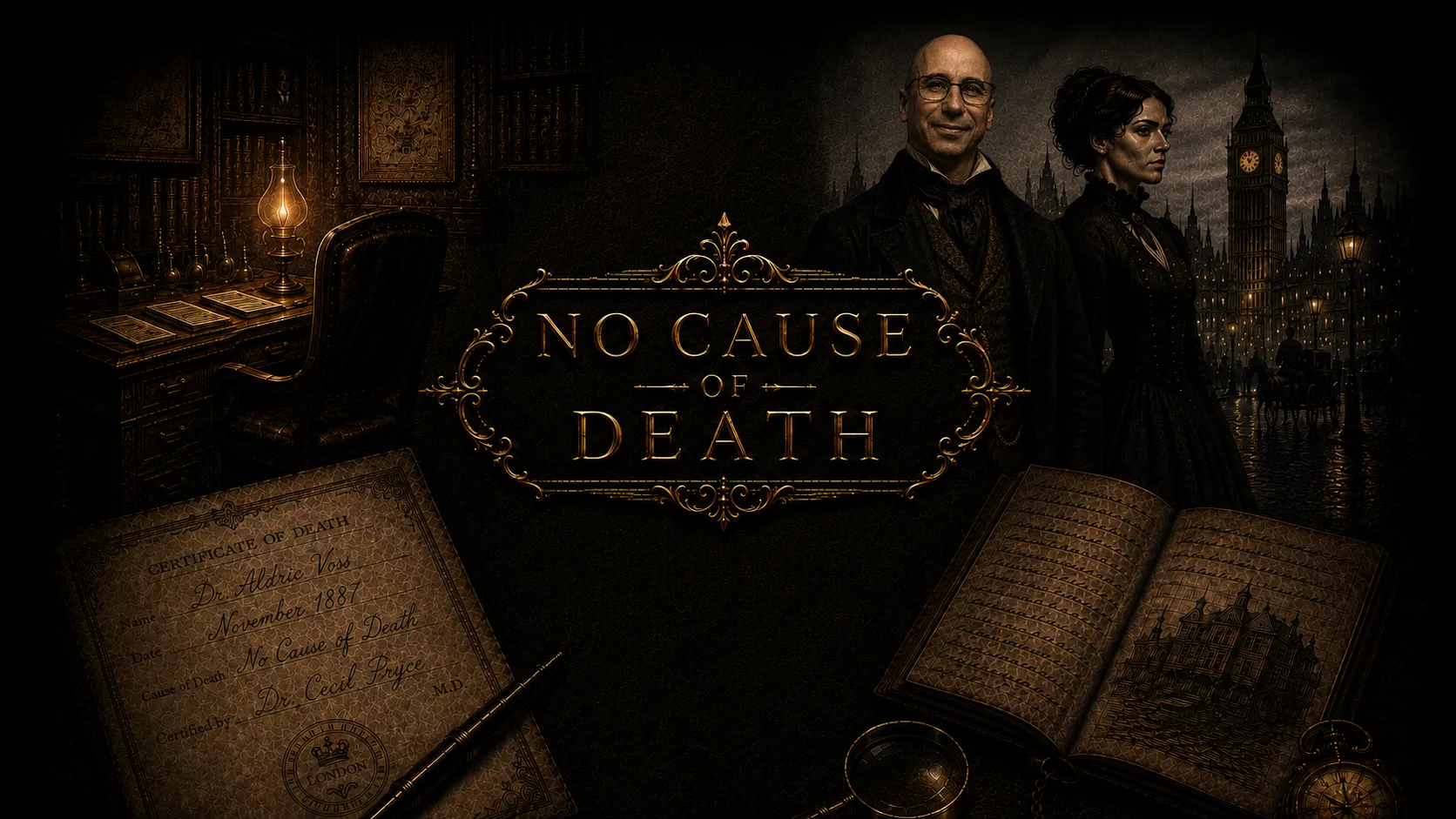
Dr. Aldric Voss has been found dead in his private study.
The door was locked from the inside. On the floor beside him: an unlabelled vial, mostly empty — a prepared compound, unmistakably mixed by hand.

Dr. Cecil Pryce, called to certify the death, examined the scene and signed a formal statement. His conclusion: Mara Fell, Voss's assistant, prepared the compound found beside the body. He believes it contributed to his death.

Mara denies it. She is asking for your help.

The police return in exactly sixty minutes with a warrant for her arrest.
The truth is in this room. It will not wait.

Examine the cabinet
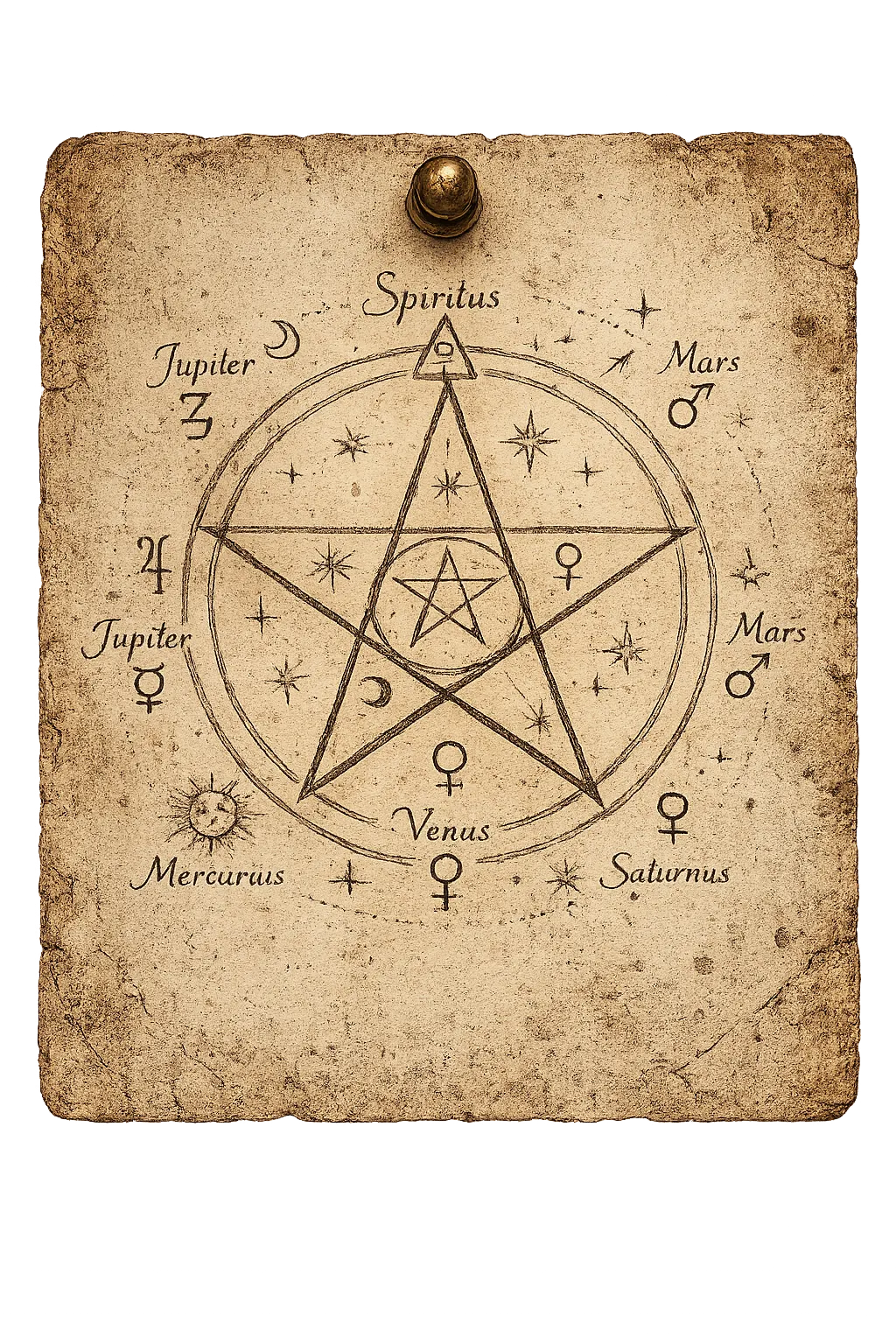
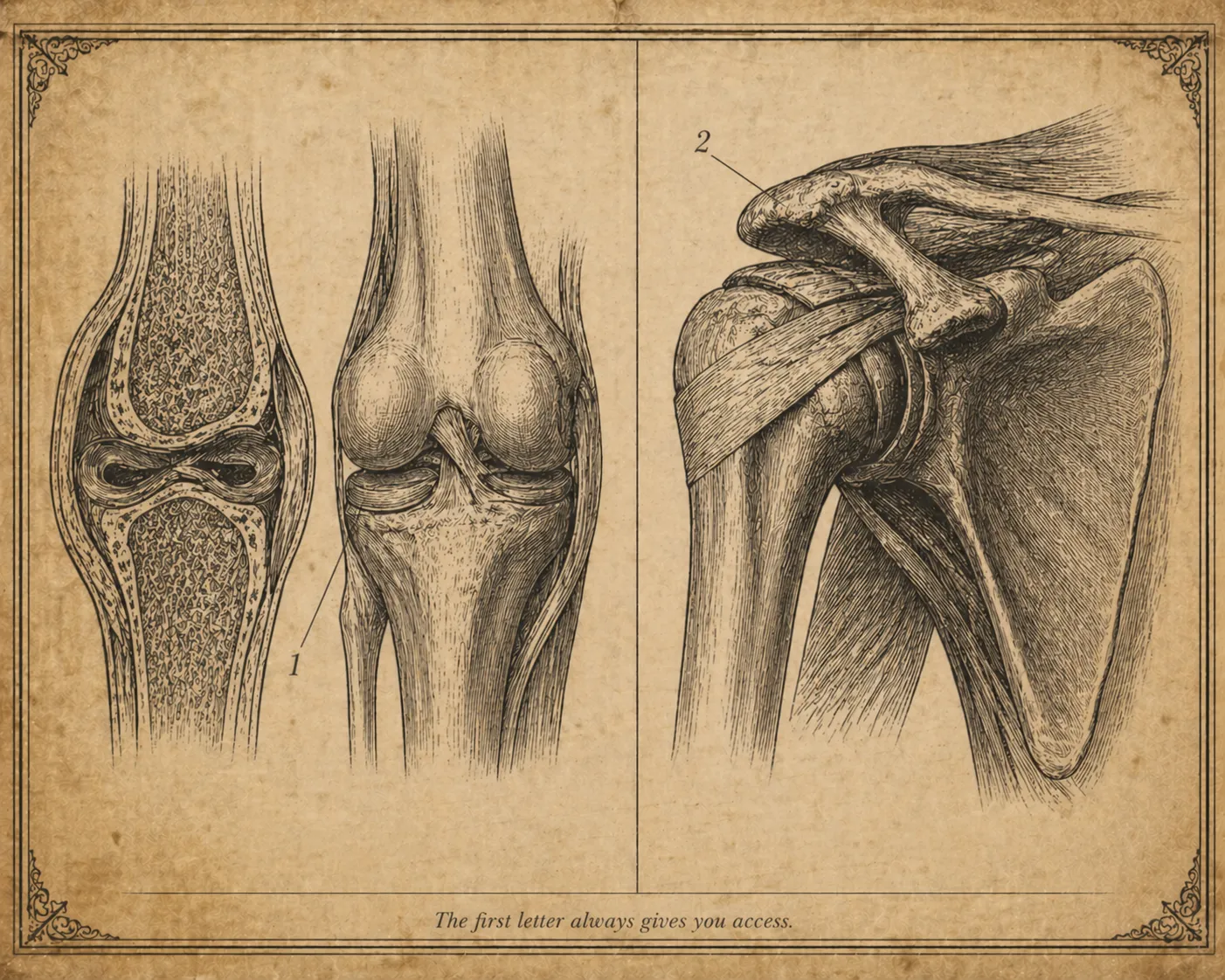
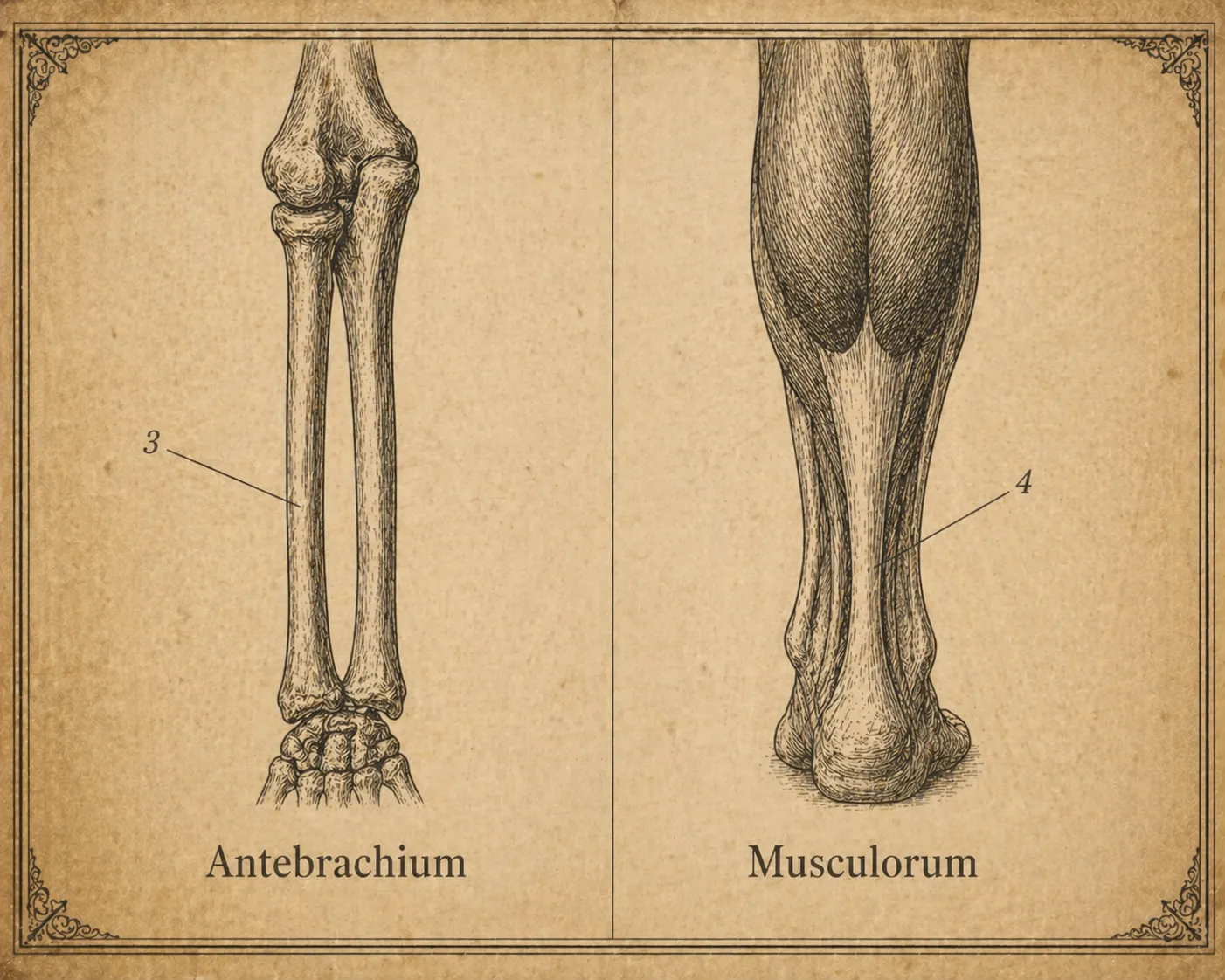
Study the plate
Study the plate
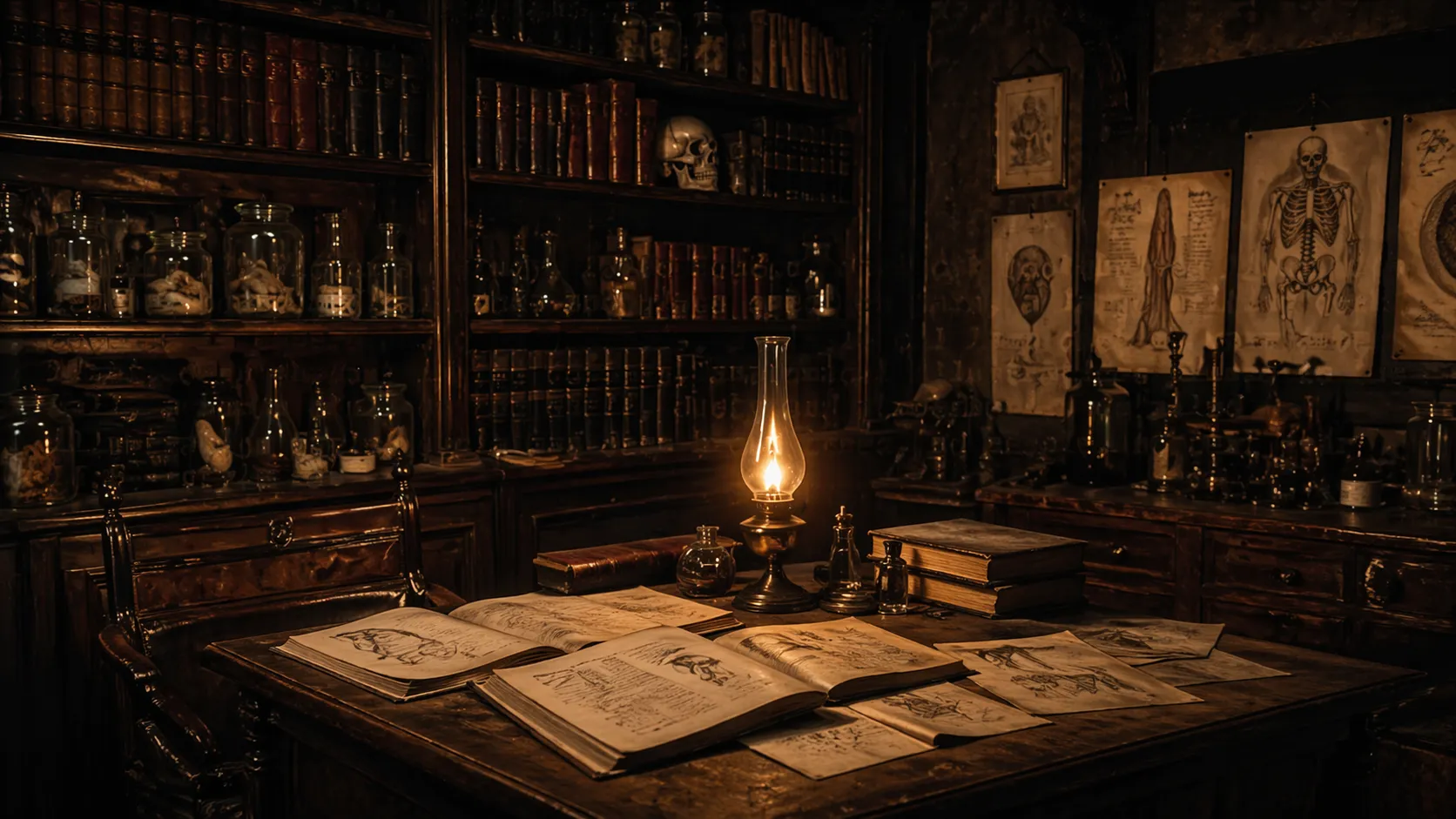
The study of Dr. Voss

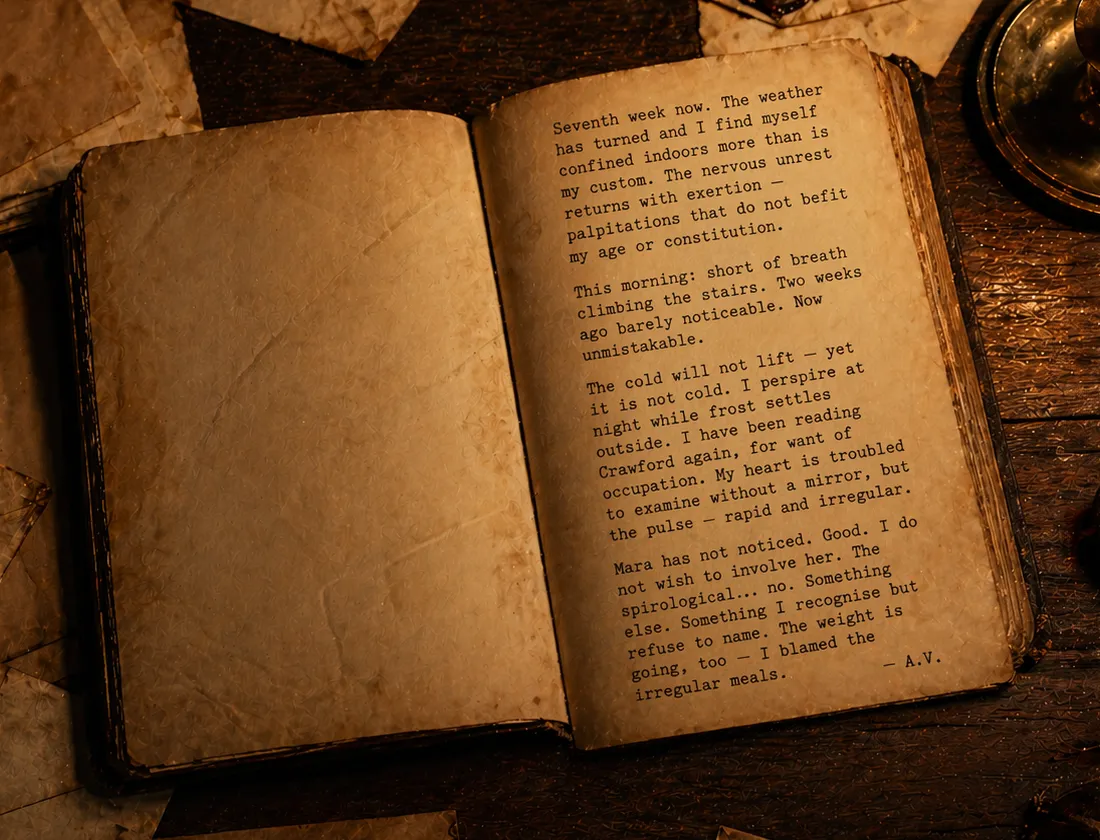
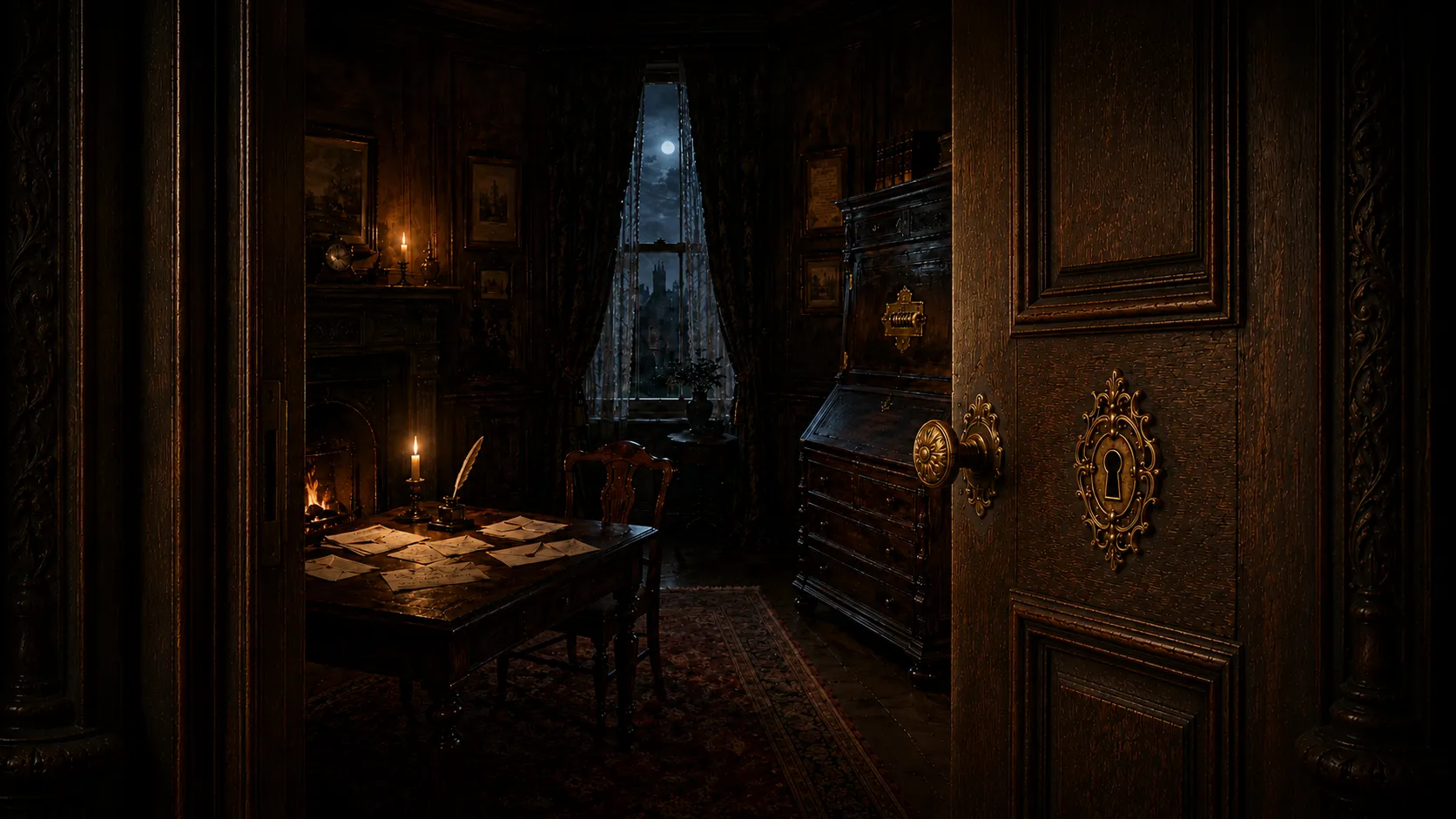
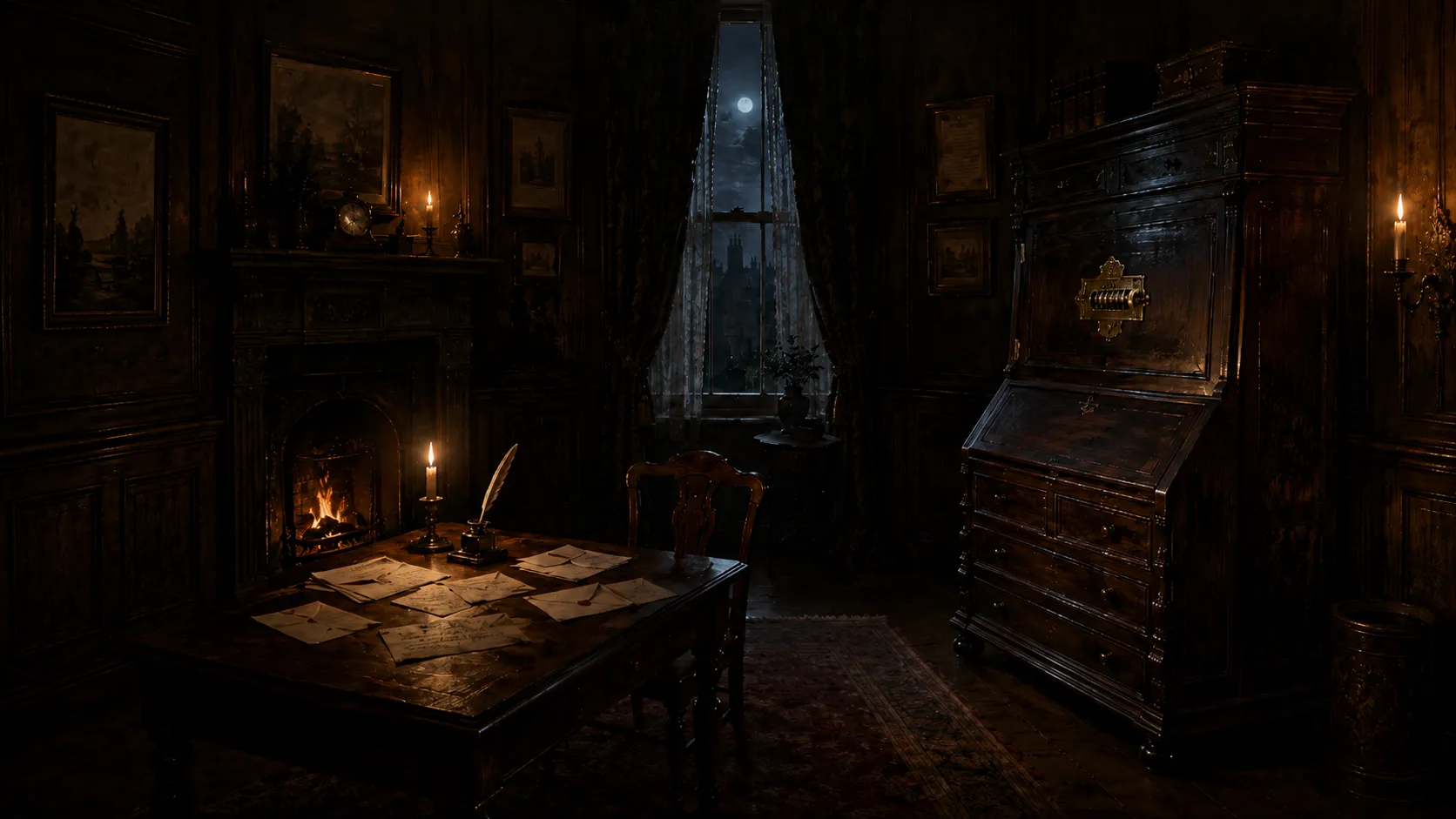
The study holds its silence. Candlelight, almost spent. On the desk: a closed journal, papers weighted down, an inkwell long dry. Someone was working here recently — and stopped.

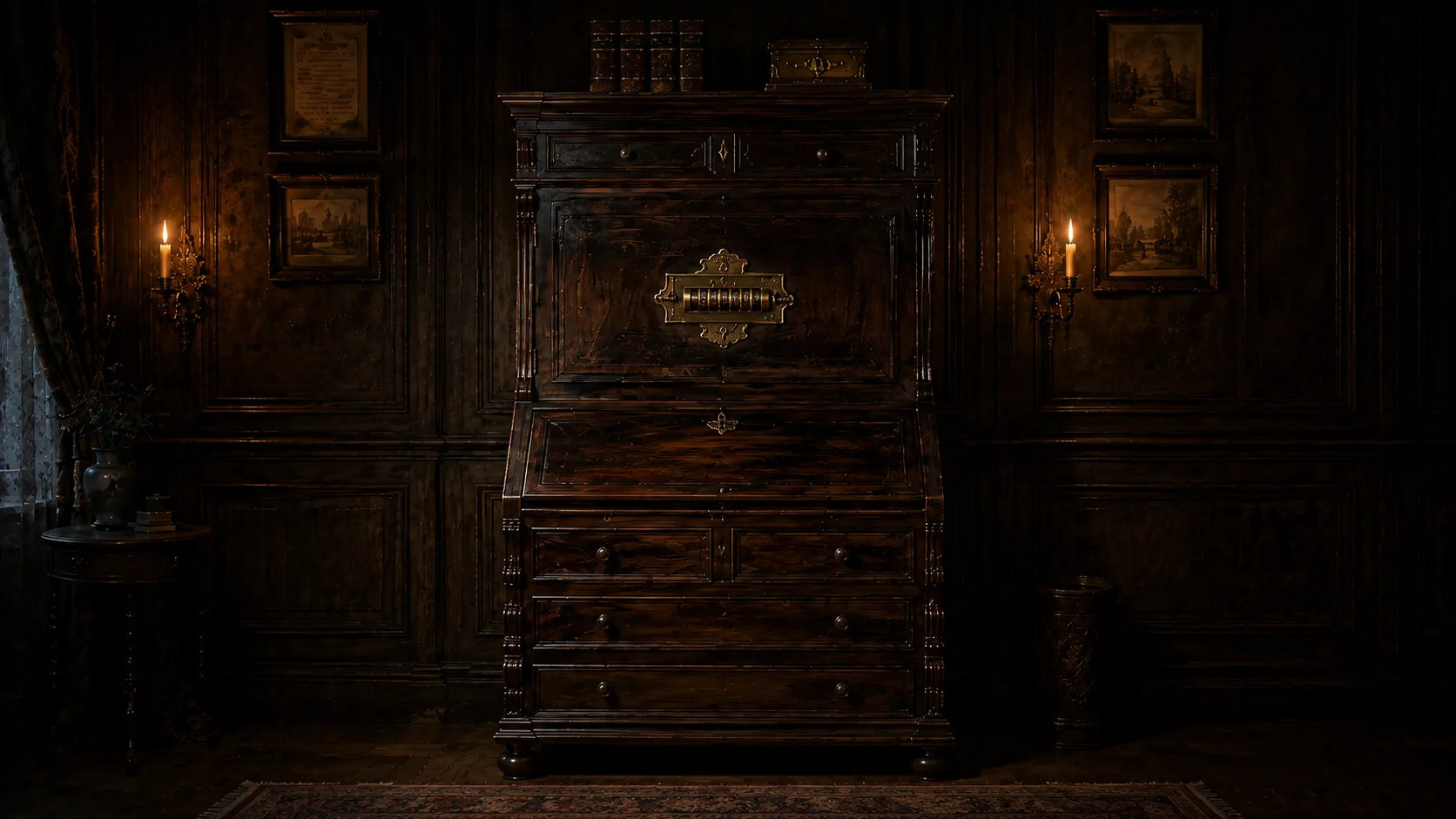
Along the far wall, a bookshelf behind locked glass. Voss kept it locked even from Mara — she told you so herself. Two anatomical plates hang on the wall nearby.

The bookshelves

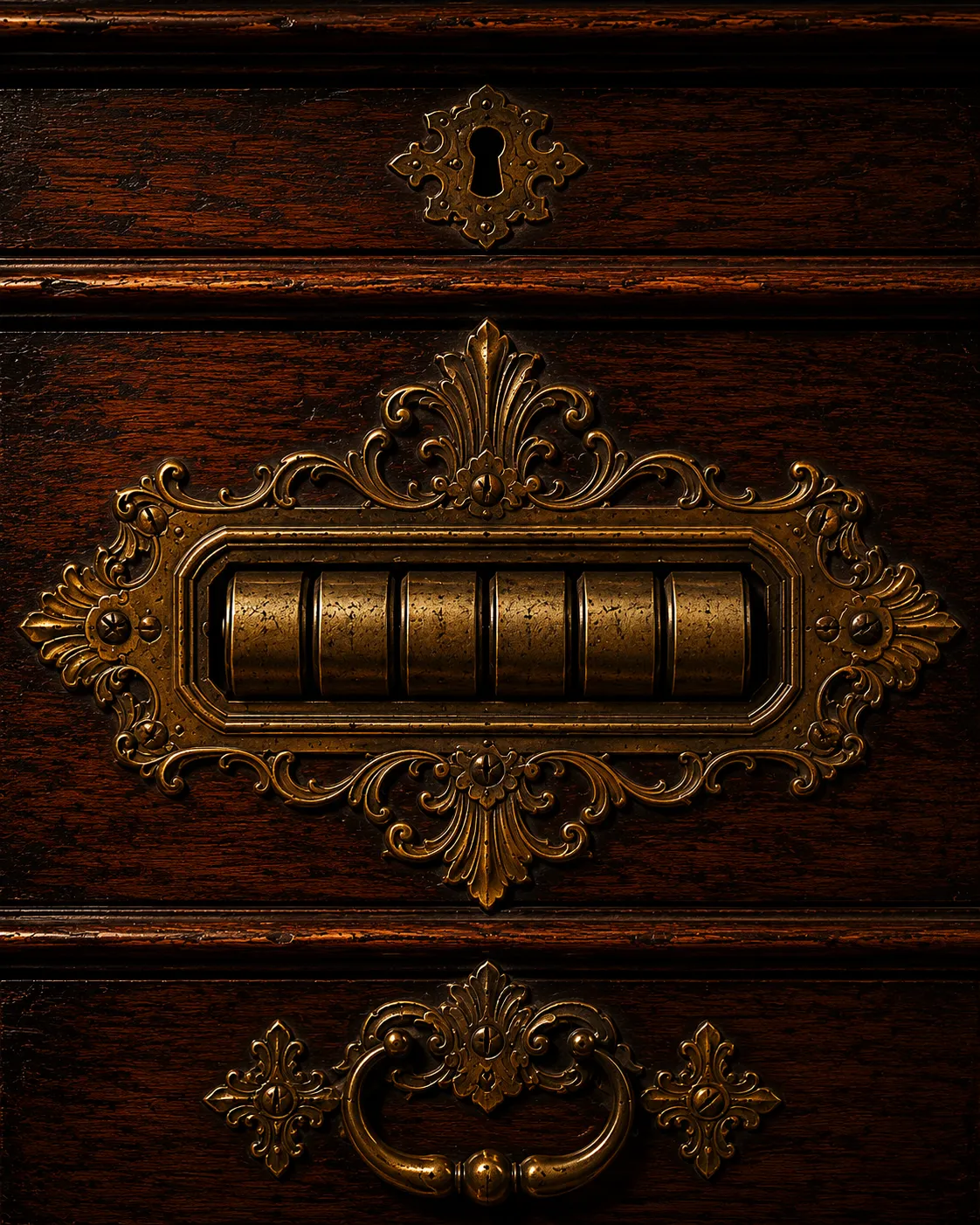
Behind the glass: five volumes on the conduction of the heart, guarded by bronze figures. The cabinet is locked.

Enter the four-letter code
Locked bookshelf
Anatomical plate
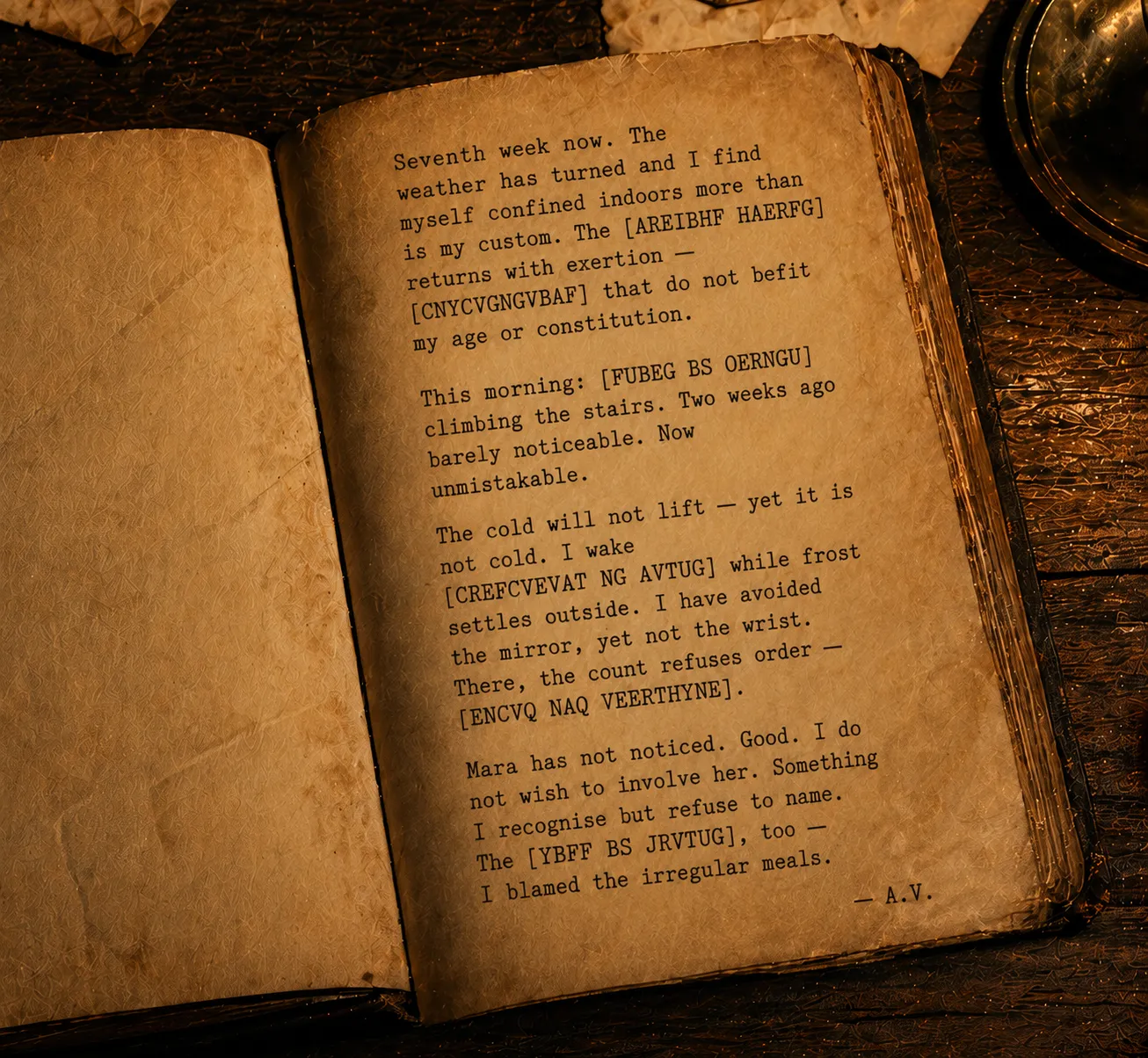
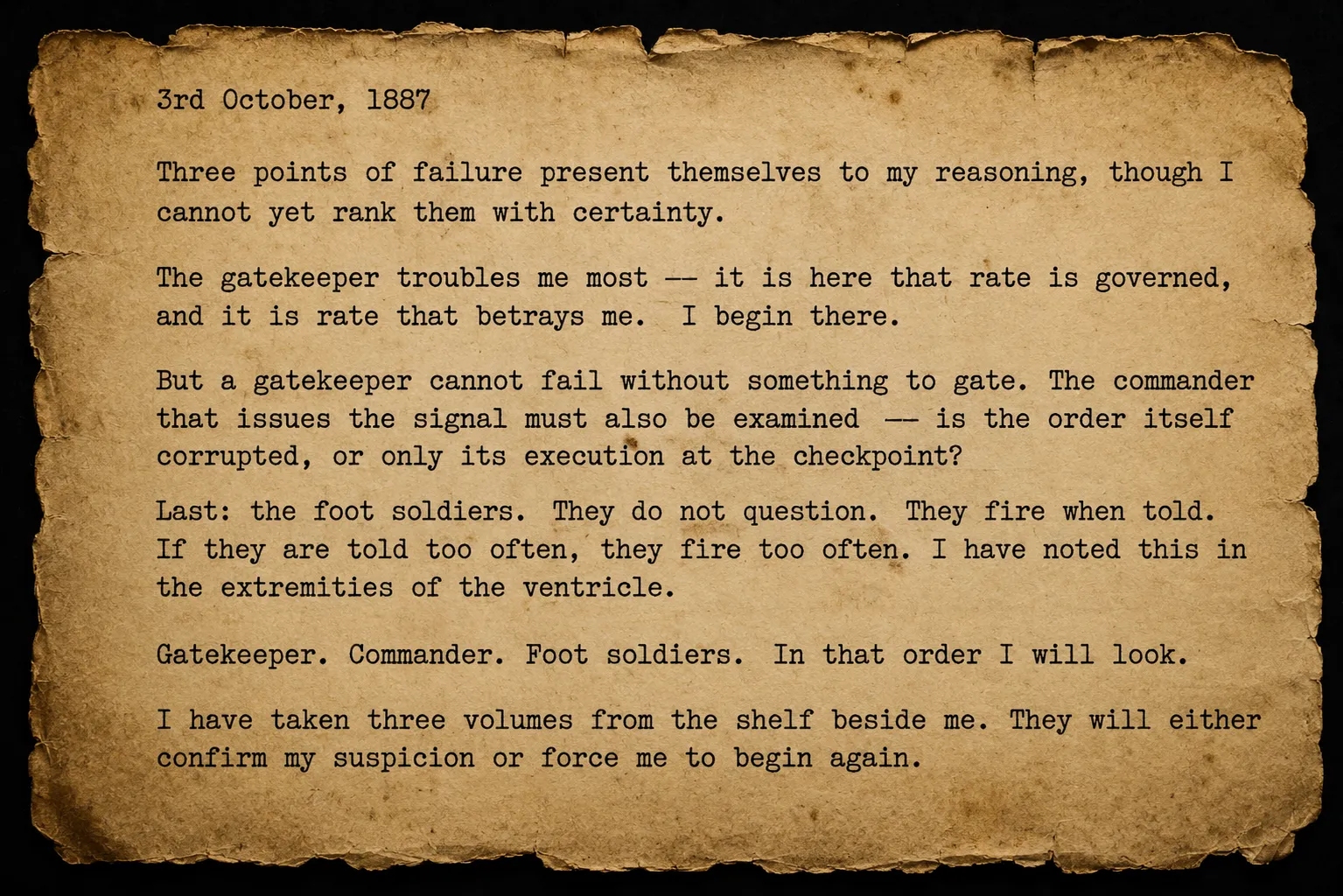
Diary note — 3rd October 1887
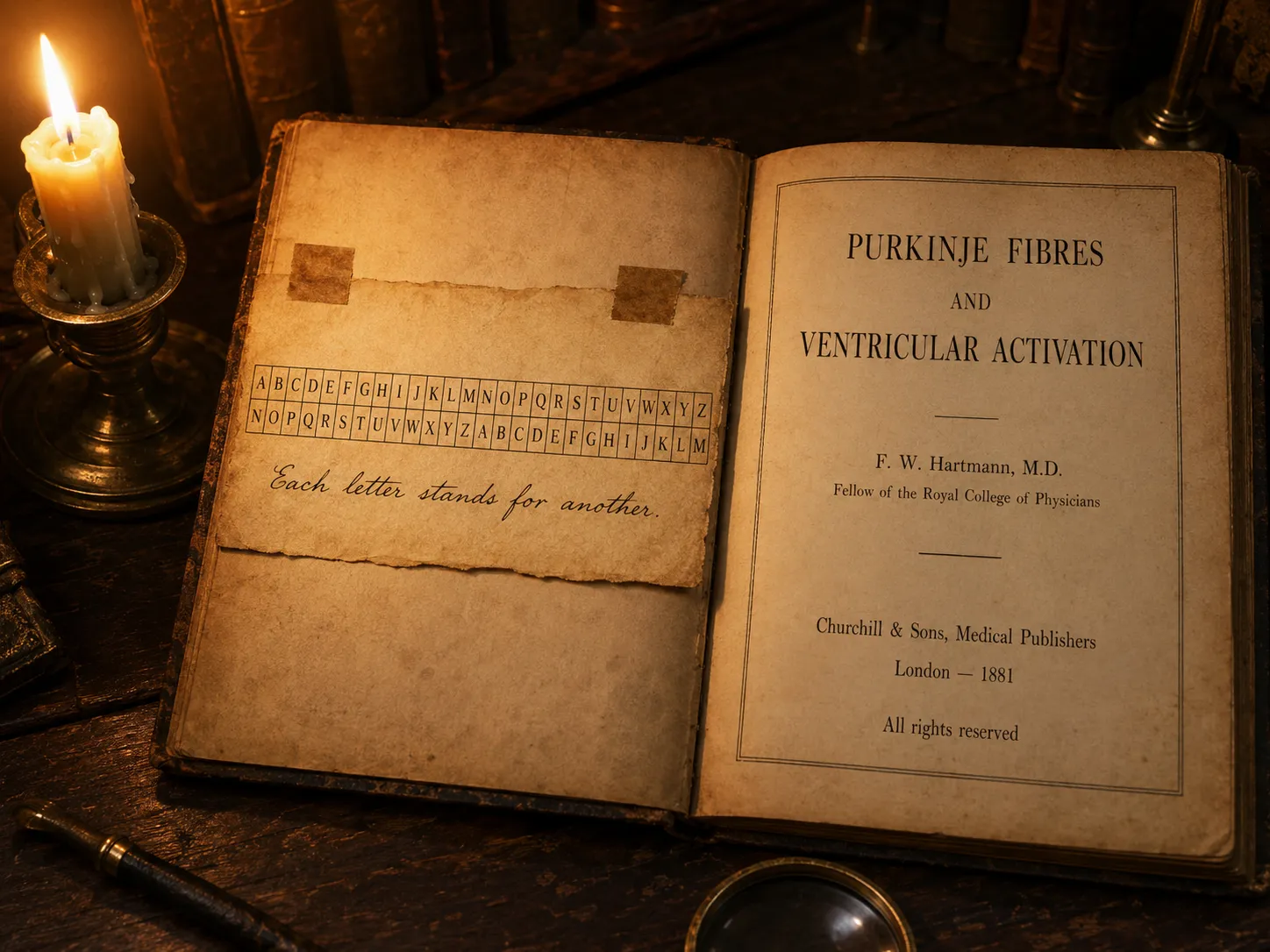
Cipher key — Purkinje Fibres and Ventricular Activation
Evidence
The diary of Dr. Voss

Voss wrote plainly when he wished to observe.
He wrote in cipher when he wished not to understand.

The table from the cabinet may help where his honesty fails.

DECODE THE DIARY

Which concealed sign points beyond complaint, toward rhythm?

The door to the correspondence chamber

The key from Voss's journal is heavy in your hand.

He kept it hidden there. Hidden things have doors.

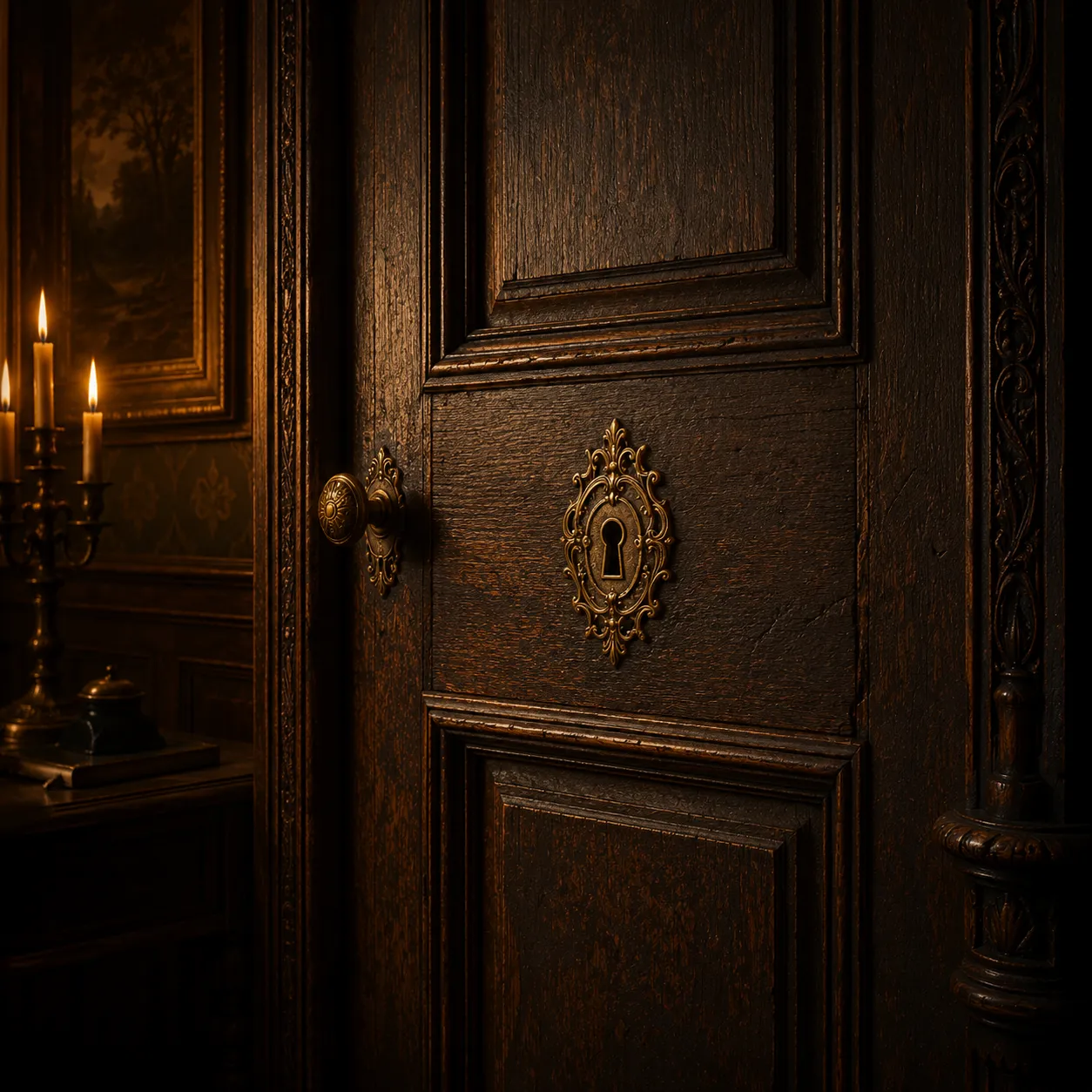
At the far end of the study — a door you had not tried. The correspondence chamber. Voss's letters are in there. You are certain of it.

The mechanism on the lock

You press the key to the lock — and stop.

The keyhole is not open. Something covers it. Tiles, arranged in a pattern, scattered and displaced — as though someone tried to conceal what lies beneath.

Clear the mechanism. Then the key will find its place.

Moves: 0
In place: 0 / 15

The tiles settle. The mechanism falls quiet.

What was hidden beneath it is now visible — an ornate letter, assembled from scattered pieces.

"If a letter is missing — this is what you must add."

The keyhole is free.

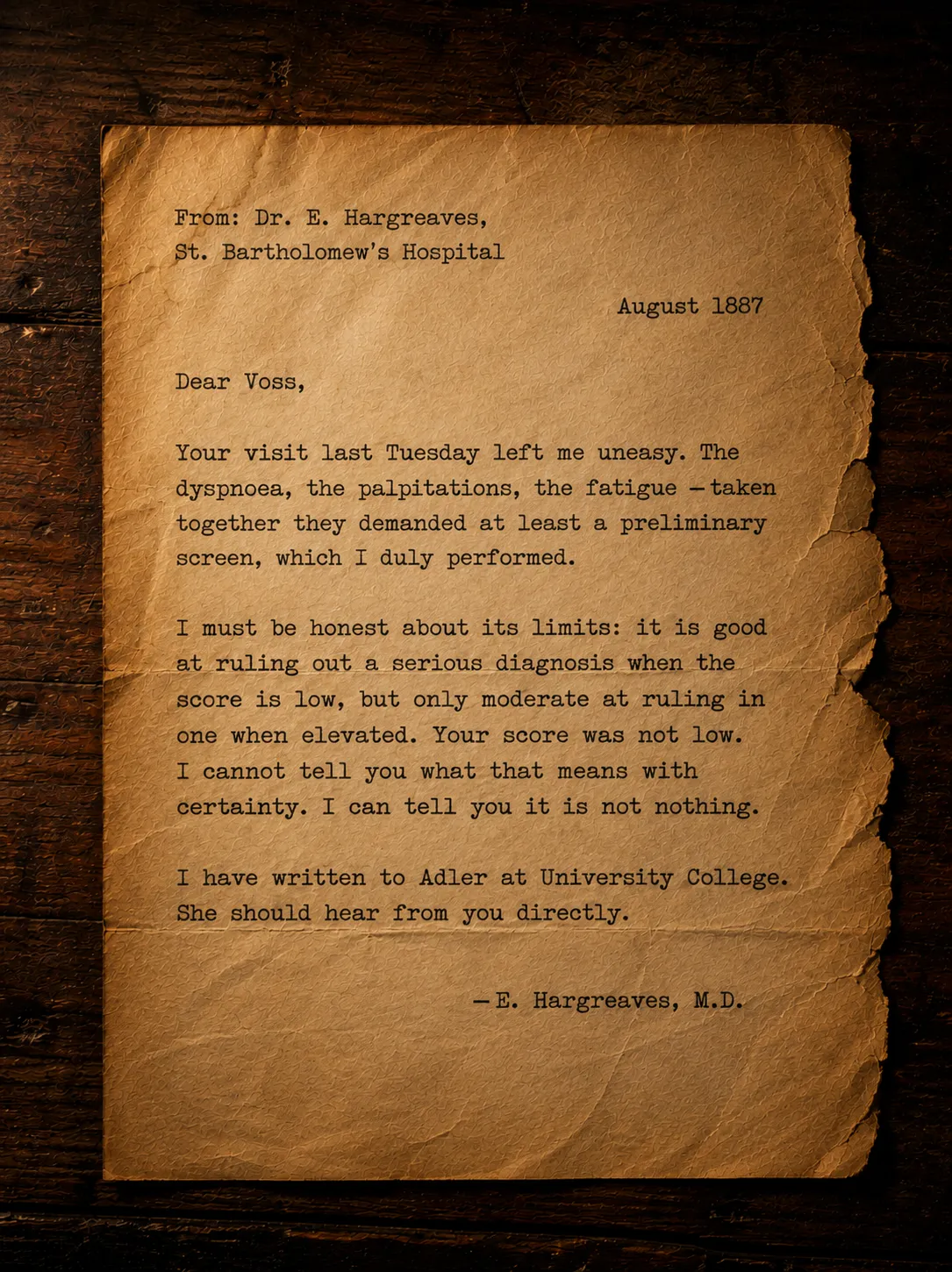
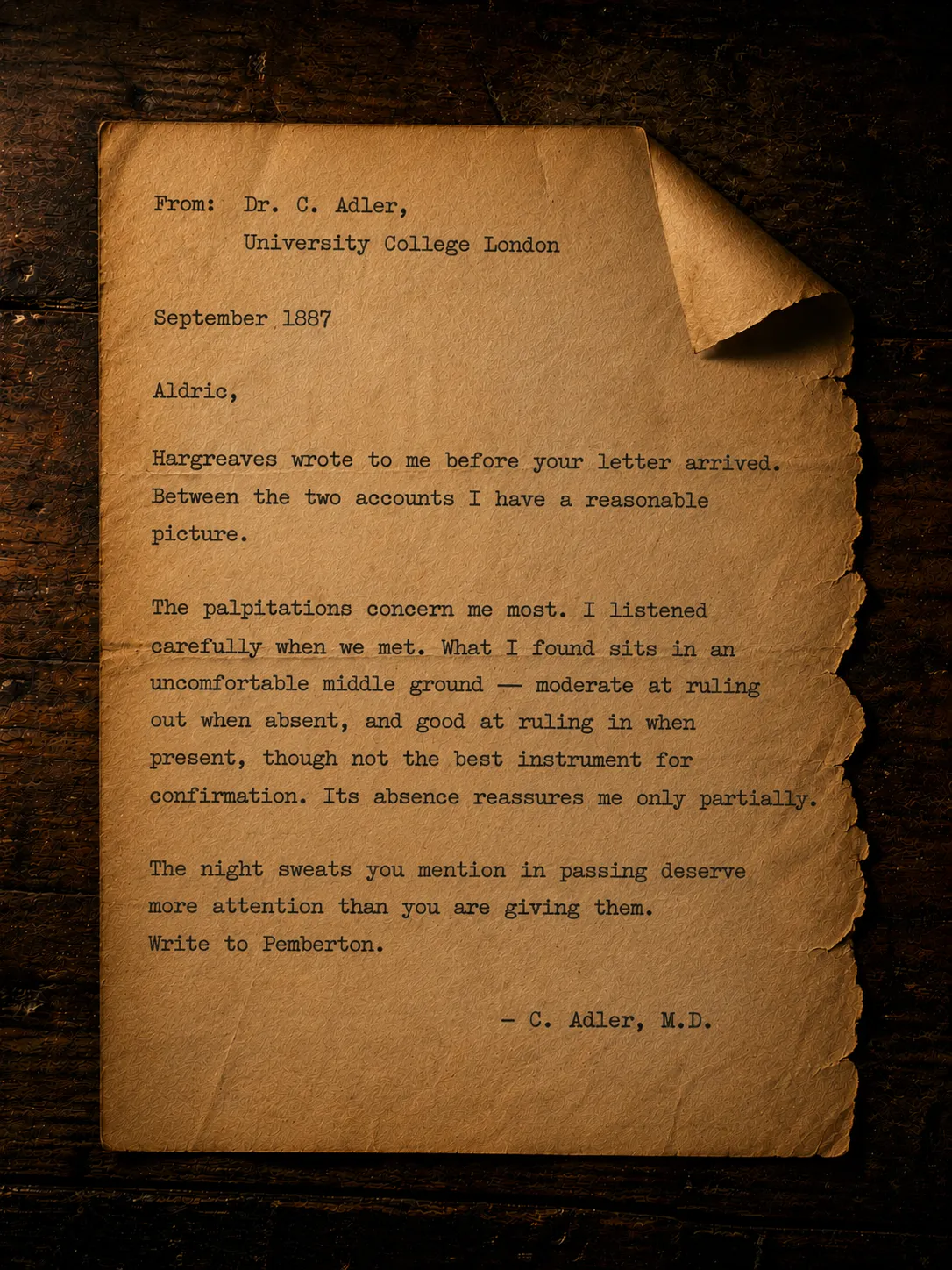
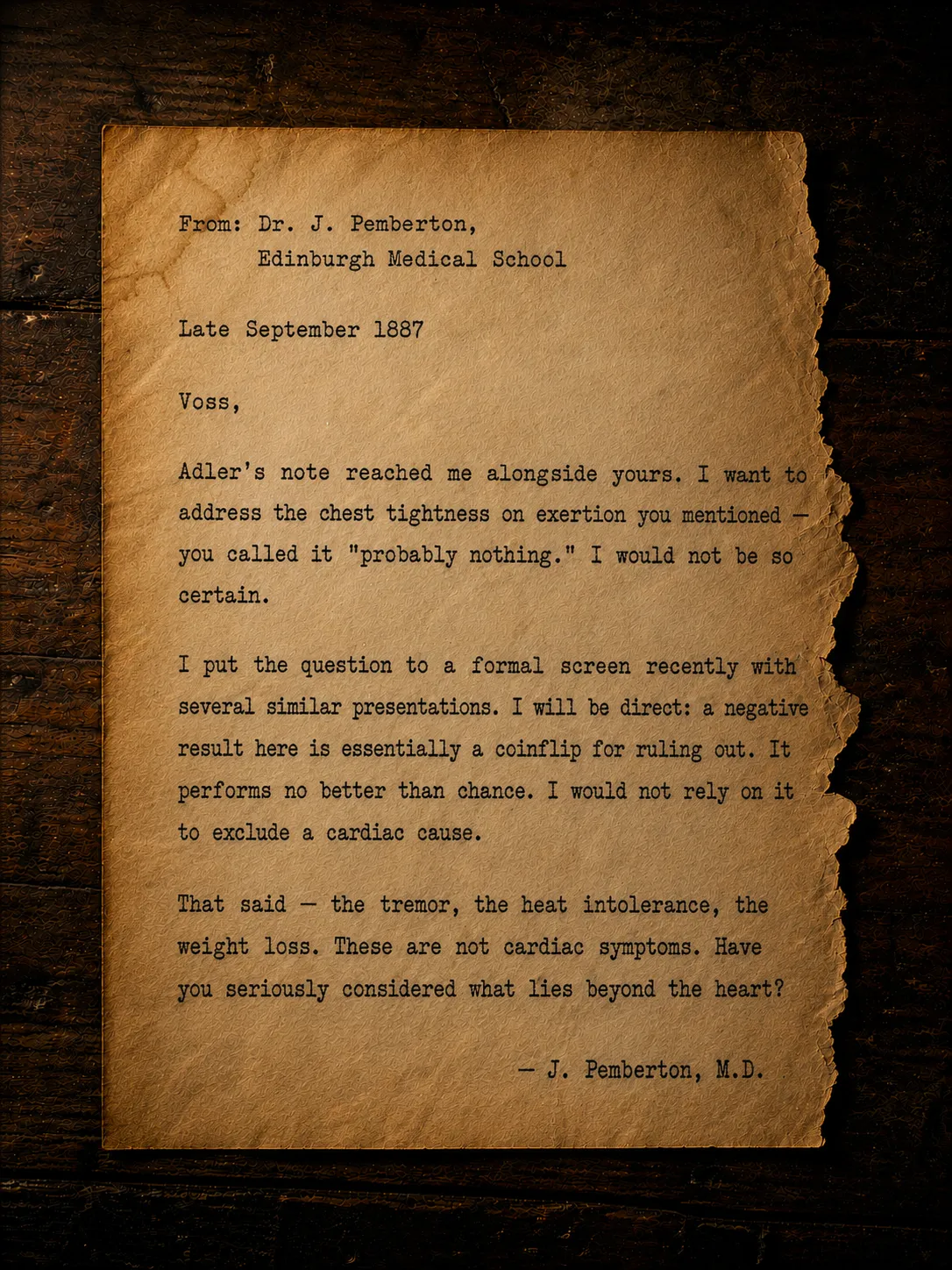
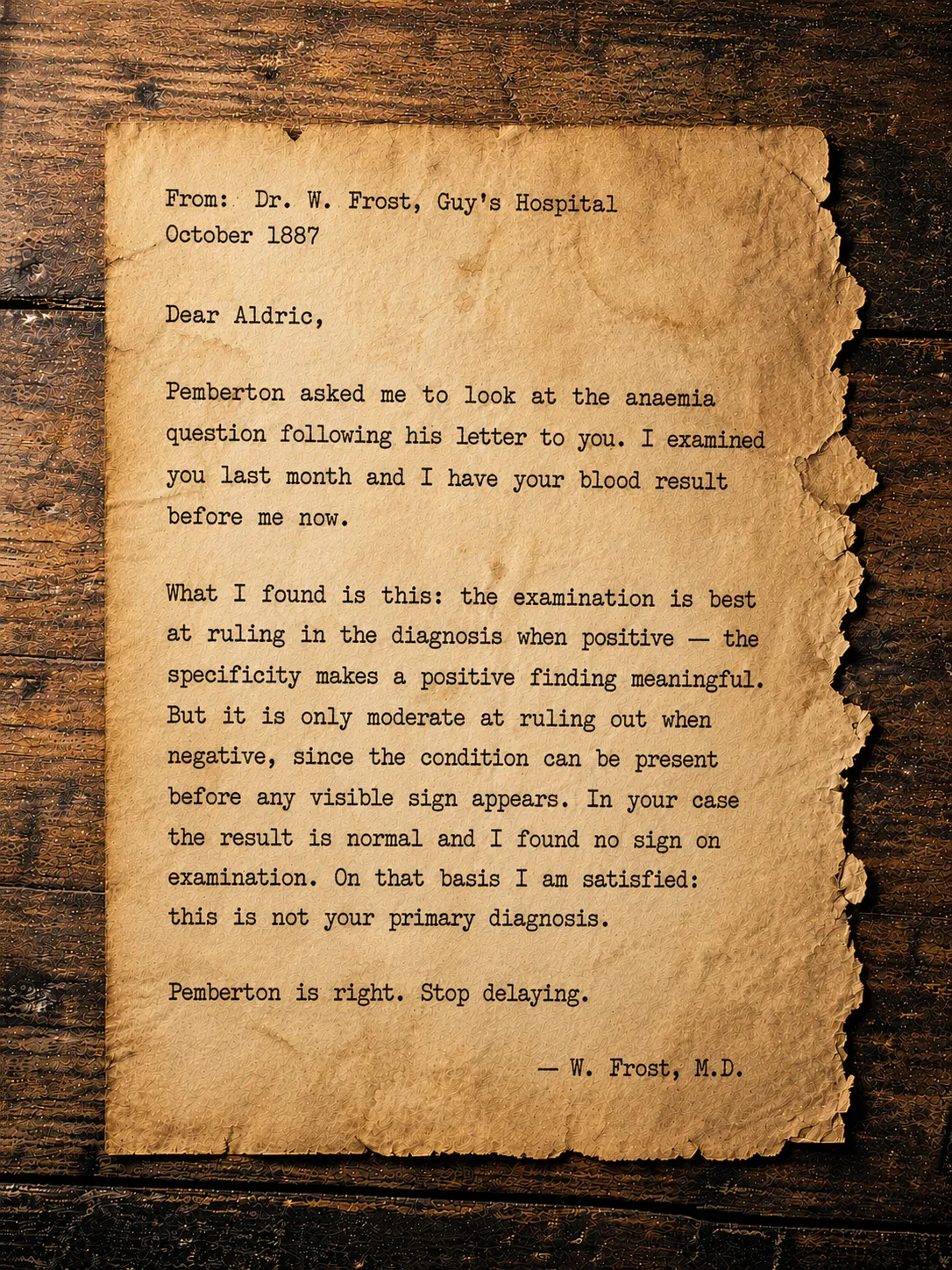
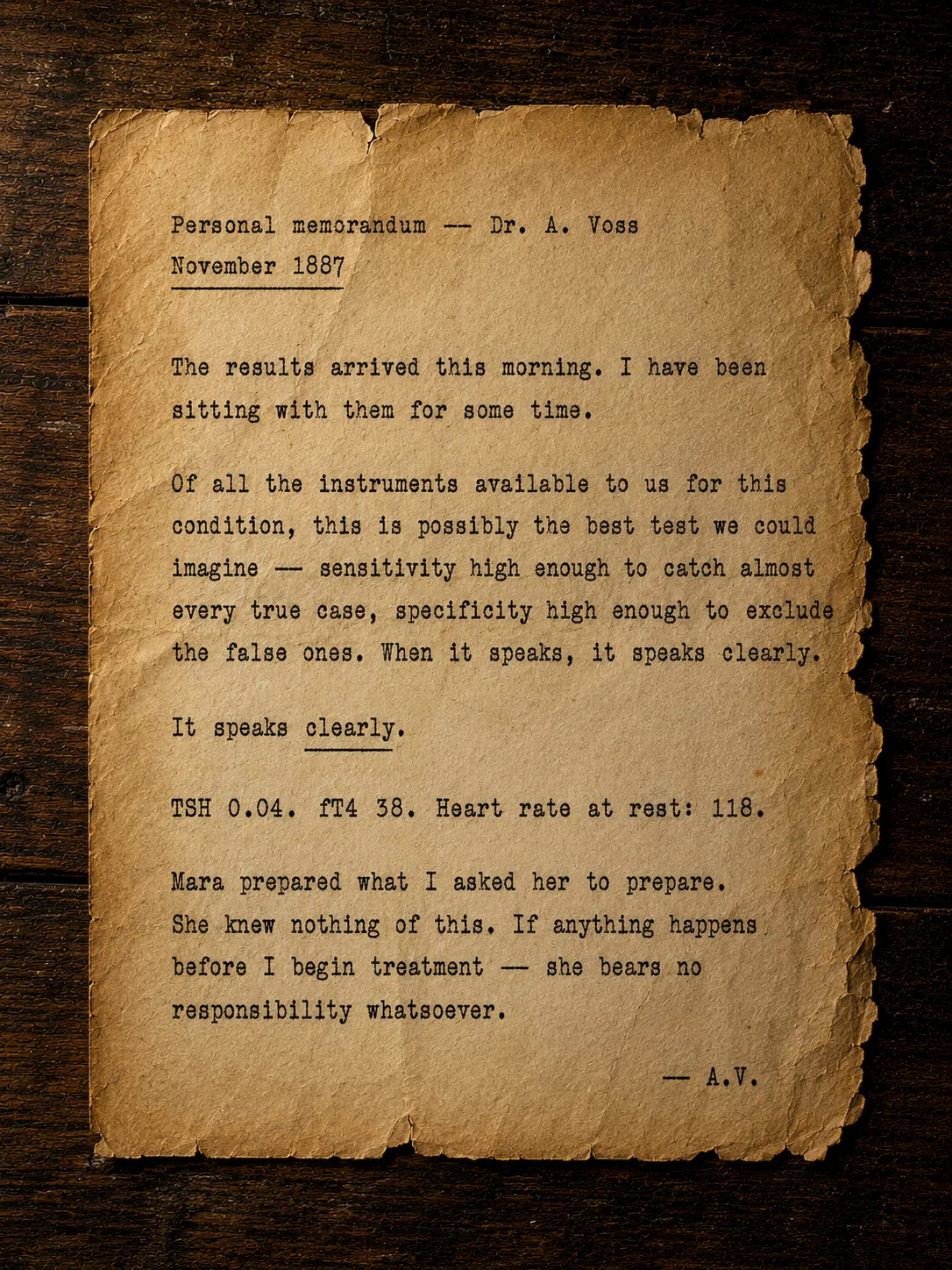
The correspondence chamber. On the writing table lie five letters from physicians who examined Voss in the months before his death.

He wrote to them because he already suspected what his own hand had recorded.
Examine the letters
Locked — perhaps examine something else first
Room II — The Correspondence
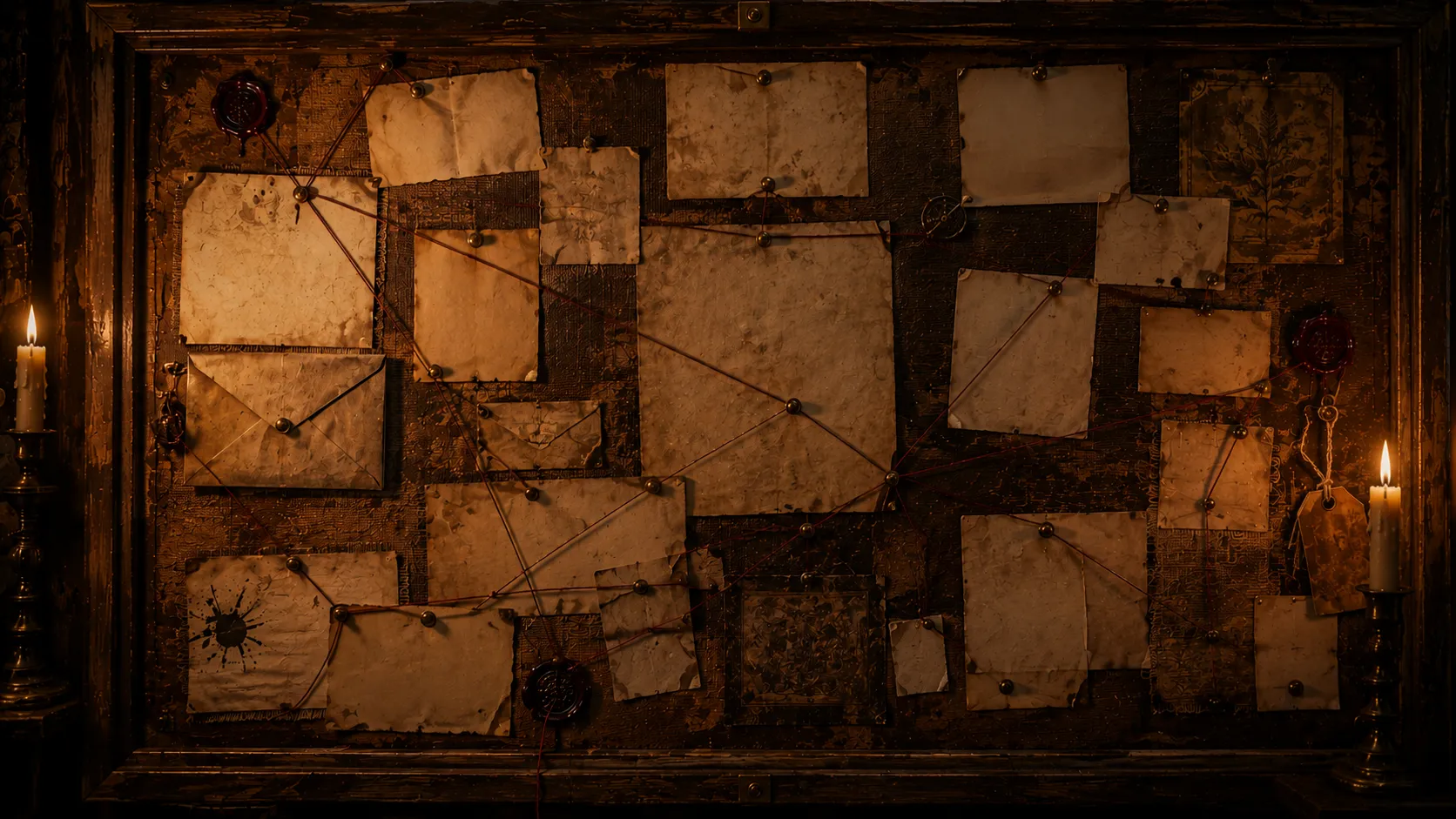
Examine board
Examine table
Room III — The Laboratory
Dr. Cecil Pryce
DR. CECIL PRYCE

"I have nothing to say to you. The girl is guilty and the matter is closed."

No cause of death.
Mara Fell is free
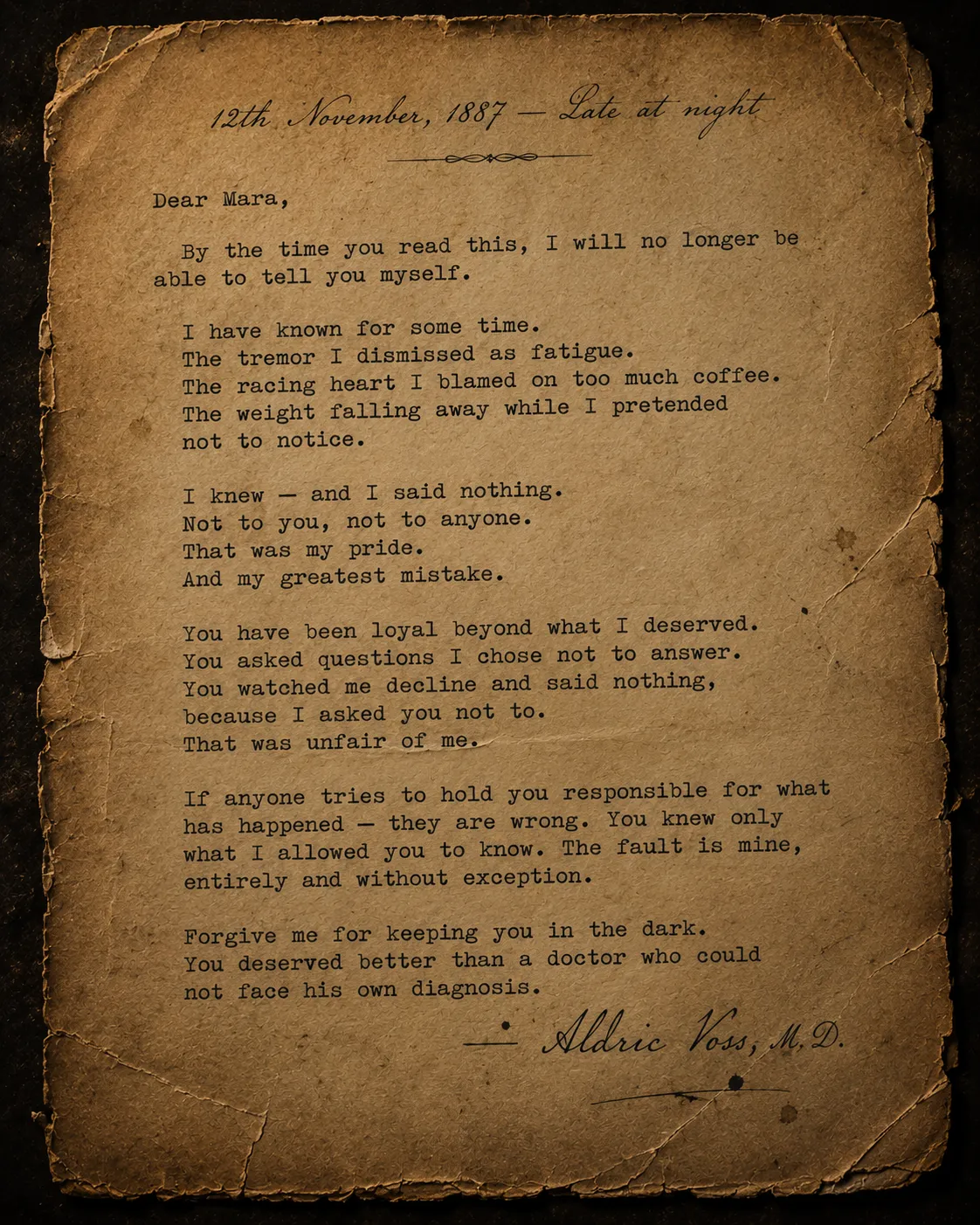
Voss final letter
Didactic debrief
Mara Fell — convicted

Your argument was not strong enough.
Dr. Cecil Pryce walked out of the house.

Mara was taken by the police and charged with the murder of Dr. Aldric Voss.
The truth died with her silence.

THINK CAREFULLY ABOUT WHICH EVIDENCE ANSWERS EACH QUESTION

Time ran out.

The police returned before you could prove her innocence.

Mara Fell was arrested and charged with the murder of Dr. Aldric Voss.
The truth was never heard.

From game to clinical reasoning

You did not just solve puzzles. In each room, you practised a different part of clinical reasoning.

Room I — Anatomy, function and sequence.
You used anatomical and physiological knowledge to understand the function of different structures and place them in the correct sequence. In clinical reasoning, knowledge only becomes useful when you can apply it to how a system works.

Room II — Diagnostic information and interpretation.
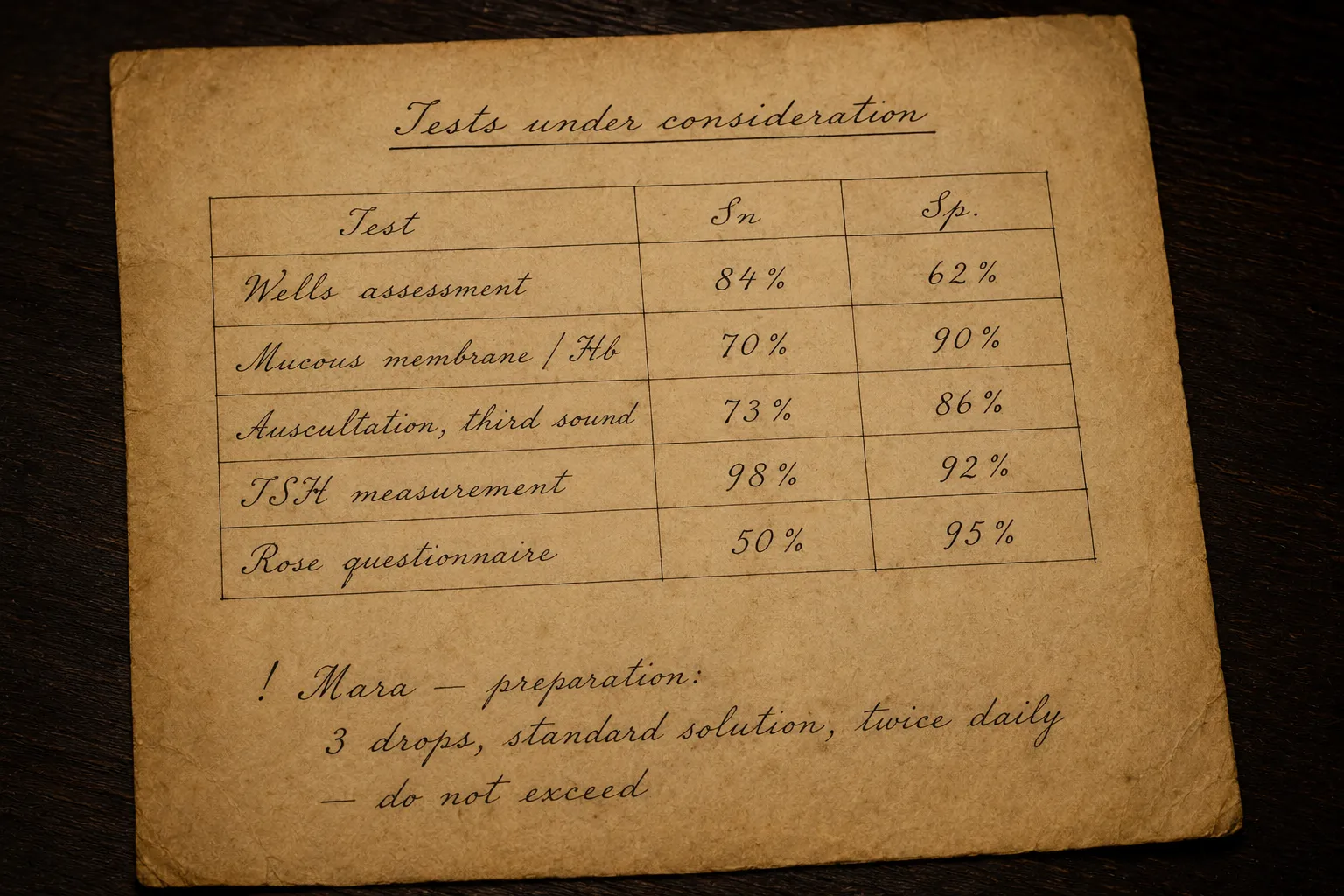
You used sensitivity, specificity, SnNOUT and SpPIN to interpret the correspondence. The room was not about finding isolated facts, but about understanding what diagnostic information actually means.

Room III — Combining evidence.
You connected symbols, notes, substances and test results to reach a clearer interpretation. This mirrors clinical practice: single findings rarely give the full answer. Reasoning improves when different sources of information are combined.

Room IV — Defending your conclusion.
You had to select the right evidence and use it at the right moment. In clinical practice, a conclusion is only strong when you can explain why the evidence supports it.

CLINICAL REASONING TAKEAWAY

Good clinical reasoning means recognising patterns, testing ideas, weighing evidence and explaining why one conclusion is stronger than another.

══════════════════════════════════════════ -->